
Pub Ed
Wildfire and your home.
What the wildland urban interface means in our district, and what you can do before a fire ever starts.
The wildland urban interface
Where houses meet wildland.
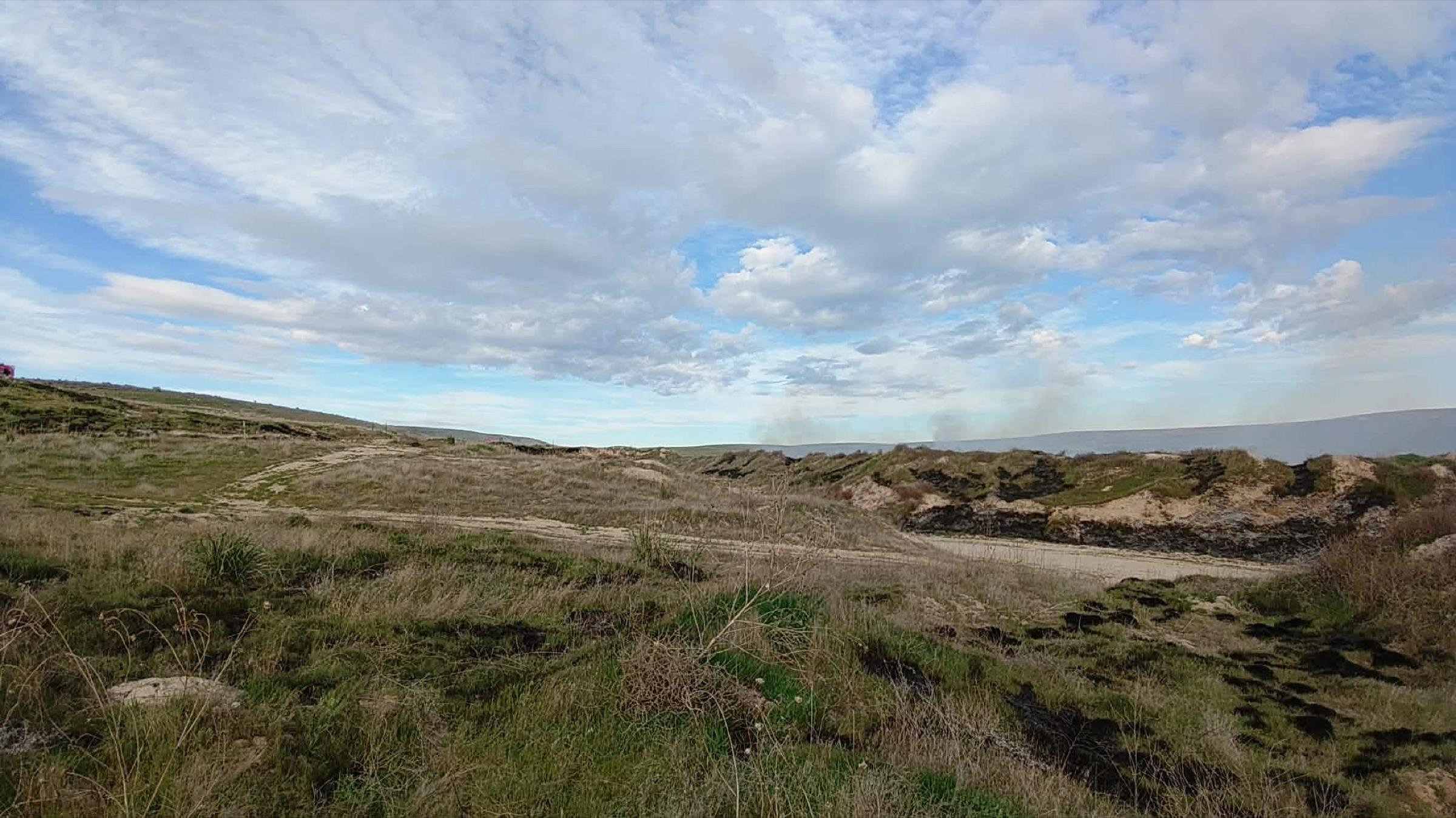
Sand Hollow Fire District includes 7,600 acres of Bureau of Land Management public land, and more housing is going into the wildland urban interface, or WUI.
The WUI is the area where houses are in or near wildland vegetation. It's where wildfire poses the greatest risk to people, because flammable vegetation is so close.
Experiments and studies after real fires show that whether a house ignites depends on the house itself and everything around it, out to 200 feet from the foundation. The National Fire Protection Association (NFPA), which runs the Firewise program, calls this the home ignition zone. Clearing and maintaining it is how you build defensible space, and NFPA's guidance is what this page follows.
How a house catches fire
- Embers
- Burning bits of wood and plants can ride the wind for more than a mile, then land in vents, gutters, woodpiles and deck furniture. Most homes lost in a wildfire go to embers, not to flames touching the house.
- Surface fire
- Small flames moving through grass and ground litter. If nothing breaks up the fuel, they reach the fence, the deck or the house and light it.
- Large flames
- Fire in the tree tops gives off enough heat to light a wood wall from up to 100 feet away. Burning sheds, woodpiles and vehicles make large flames too.
Nothing can guarantee a home will survive a wildfire. Each step on this page improves the odds.
Defensible space
Three zones around your home.
Immediate Zone
The house and out to 5 feet
Start here. Keep this ground clear of dead plants, dry leaves and other debris. Take out trees and shrubs, replace wood mulch with gravel or crushed stone, and use concrete, stone or gravel around the house and for walkways.
Intermediate Zone
5 to 30 feet
Keep lawns and native grasses mowed to 4 inches, and water plants, trees and lawns so they don't dry out. Limit trees and shrubs to small clusters, with at least 18 feet between tree tops. Clear what's growing under trees and prune the lower branches so a grass fire can't climb into them. Clear plants from under large propane tanks. Driveways, paths and patios make good fuel breaks.
Extended Zone
30 to 100 feet
Clear heavy buildup of ground litter, remove dead plants and trees, and remove what's growing next to sheds and outbuildings. Leave at least 12 feet between tree tops from 30 to 60 feet out, and 6 feet from 60 to 100 feet.
If your land runs past 100 feet, NFPA suggests carrying this work out to 200 feet. If your property line stops short, work with your neighbor. Slope and tree type can call for more space between trees, so ask if you aren't sure.
The house itself
Harden your home against embers and heat.
Roof and vents
Class A fire-rated roofing gives the best protection: composite shingles, metal, concrete or clay tile. Replace loose or missing pieces. Box in the eaves but keep them vented, and cover roof and attic vents with 1/8 inch metal mesh so embers can't get in.
Decks and porches
Don't keep anything flammable underneath. Clear out dead plants and debris from under them and from the gaps between the deck boards.
Siding and windows
Embers collect in small gaps, and radiant heat can crack a window. Brick, fiber-cement, plaster and stucco siding all resist fire, and so do dual-pane tempered glass windows.
Trees and plants
Trim branches that hang over the house, porch or deck. On large trees, prune the lower branches up 6 to 10 feet from the ground, depending on the tree's height. Take out plants high in resin, oil or wax.
Finding your place
Street names and house numbers should be clearly marked and easy to read, so crews can find you.
Based on the National Fire Protection Association's guide to preparing your home for wildfire. Preparing homes for wildfire (opens in a new tab)
Check your place
Where to start.
NFPA's order is the house first, then the landscaping within 5 feet of it, then the outer zones. These are among the jobs it ranks first:
- Keep flammable items out of carports and out from under decks and porches.
- Keep the roof and gutters clear of leaves, needles and other debris.
- Cut any tree limbs that hang over the roof or come within 10 feet of the chimney.
- Put a spark arrestor on the chimney.
- If a fence attaches to the house, make at least the last 5 feet metal or masonry.
- Seal gaps in the siding, and caulk where the trim meets it.
- Within 5 feet of the house, clear dead plants and debris and replace wood mulch with gravel or crushed stone.
Go through NFPA's checklist
The checklist covers the house and all three zones, and ranks each job by priority. The shorter sheet is a quick overview.
- Home ignition zone checklist · NFPA (PDF, opens in a new tab)
- How to prepare your home for wildfires · NFPA (PDF, opens in a new tab)
Questions about your place? Call (986) 221-9127 or send us a message.
Getting out
Be ready before it starts.
- Make an emergency plan and practice it with everyone in your home. Include pets, large animals and livestock.
- Know two ways out of your neighborhood, and agree on a place to meet.
- If you feel it's unsafe to stay, leave. Don't wait for an emergency notification.
- Once a year, check that your insurance keeps up with building costs, codes and any renovations. Keep a home inventory to help settle a claim faster.
More help
Where to learn more.
- NFPAHome ignition zone checklist (PDF, opens in a new tab)The jobs to do on the house and in each of the three zones, ranked by priority.PDF
- NFPAHow to prepare your home for wildfires (PDF, opens in a new tab)A quick overview of the zones, the house and being ready to leave.PDF
- NFPAPreparing homes for wildfire (opens in a new tab)The National Fire Protection Association's guidance on preparing a home for wildfire.www.nfpa.org
- NFPAFirewise USA (opens in a new tab)The national Firewise program, from the National Fire Protection Association.www.nfpa.org
- Idaho Department of LandsReady, Set, Go! Idaho (PDF, opens in a new tab)Idaho's guide to getting your family and home ready for a wildfire, and knowing when to leave.PDF
- Idaho FirewiseIdaho Firewise (opens in a new tab)Idaho's site on living with wildfire: fire resistant homes and landscapes, evacuation and more.idahofirewise.org